Windows & Doors
Reducing Noise Through Windows and Doors in Poland
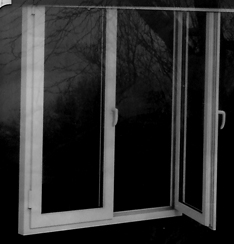
Double glazing unit cross-section. The air or gas-filled cavity between the two panes provides both thermal and acoustic insulation. Acoustic performance depends on pane thickness, cavity width, and gas fill. Source: Wikimedia Commons.
Windows and doors are among the most acoustically vulnerable elements in a building envelope. Even a heavily insulated wall with an Rw of 55 dB can have its effective performance reduced to near 30 dB if the window installed in it provides only standard double glazing without acoustic specification. In Polish residential construction, windows are the primary noise ingress path in urban environments, particularly for traffic and railway noise.
How windows affect sound transmission
The sound insulation performance of a window is primarily determined by:
- The total mass of glass in the unit (kg/m²)
- The width of the cavity between panes
- Whether the panes are equal or different thickness (asymmetric glazing)
- The gas fill of the cavity (air, argon, or krypton)
- The quality of the frame-to-wall seal and the perimeter sealant condition
- Whether a laminated glass layer is included
Standard double glazing (2+2 or 4+16+4)
Standard double-glazed units with equal-thickness panes (commonly 4 mm + 16 mm cavity + 4 mm in Poland) achieve a typical Rw of approximately 28–32 dB. This is substantially below the requirements for bedrooms and living rooms facing busy roads under Polish building regulations. Equal pane thickness creates a coincidence dip at the same frequency in both panes, reducing mid-frequency insulation.
Asymmetric glazing
Using panes of different thickness (e.g., 4 mm + 16 mm cavity + 6 mm, or 4 + 16 + 8) shifts the coincidence frequencies of each pane to different points in the frequency spectrum, avoiding the reinforced dip of equal-pane units. Typical improvement over standard equal-pane double glazing: 2–5 dB Rw.
Laminated glass (szkło laminowane)
Laminated glass consists of two or more glass layers bonded with a PVB (polyvinyl butyral) interlayer. The PVB layer provides a degree of damping, reducing the sharpness of the coincidence dip. Acoustic PVB variants provide measurably better damping than standard PVB. Including at least one laminated pane in an insulating glass unit (IGU) improves Rw by approximately 3–5 dB compared to an equivalent non-laminated unit of the same total mass.
Triple glazing (potrójne szyby)
Triple-glazed units are increasingly common in Poland, partly due to tightening thermal energy regulations (WT 2021). A standard 4/14/4/14/4 mm triple unit achieves Rw approximately 32–36 dB. The acoustic advantage of triple glazing over double glazing is less than commonly assumed — the additional glass mass is partly offset by the greater unit stiffness. Acoustic triple glazing with asymmetric pane configuration and acoustic PVB can achieve Rw 38–42 dB.
Secondary glazing
Secondary glazing — an independent inner window leaf mounted in the same reveal — provides the widest available air gap between glass surfaces (typically 80–200 mm) and achieves the highest acoustic performance of any window configuration. Rw values of 45–55 dB are achievable with wide-cavity secondary glazing, making it the preferred solution for buildings near railways, airports, or urban tram lines. Secondary glazing is common in historic buildings in Poland where replacement of original windows is restricted.
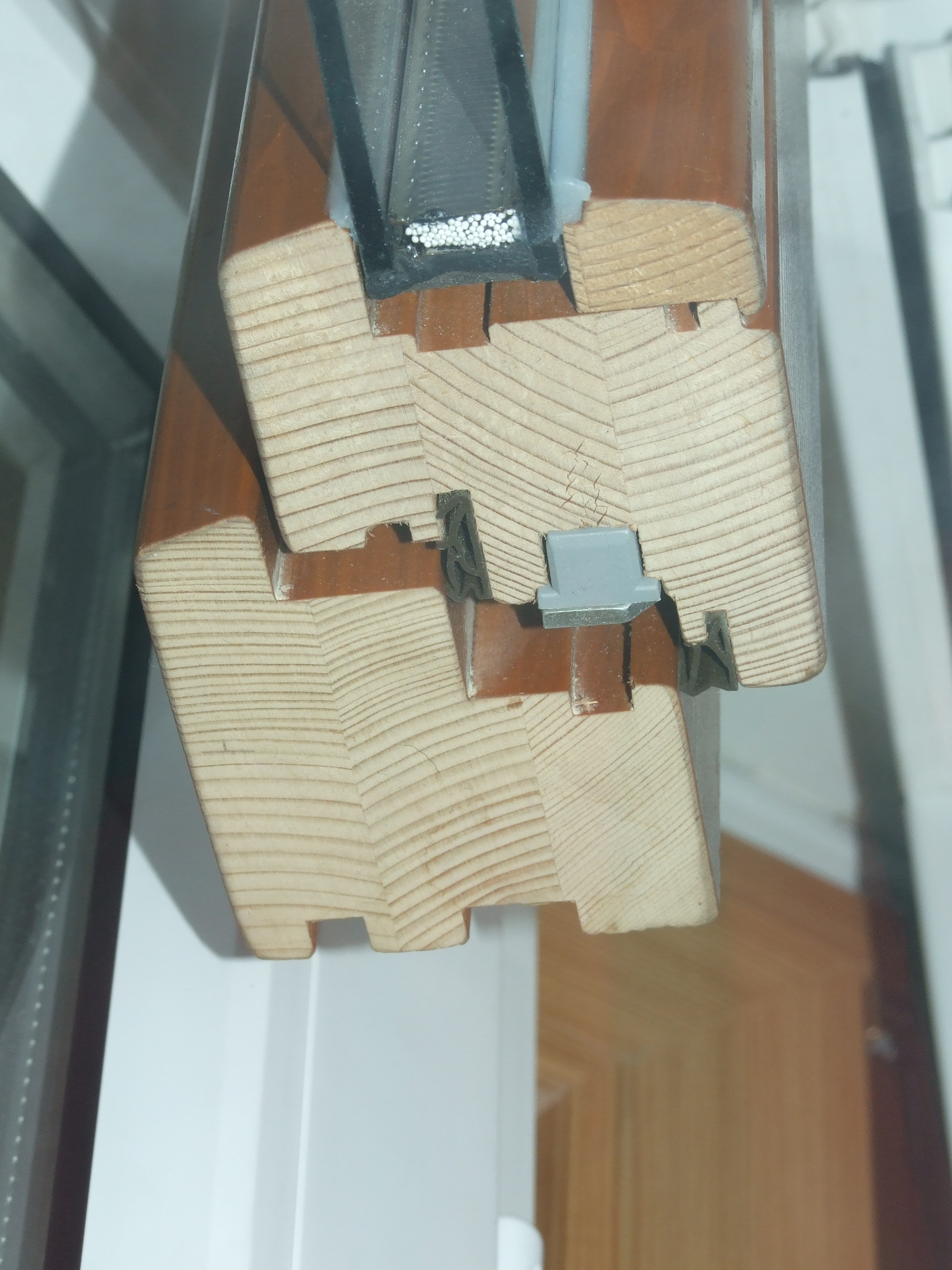
EURO 68 timber window profile with insulated glazing. Frame construction, sealing quality, and glazing specification together determine the window system's overall Rw rating. Source: Wikimedia Commons.
Frame and seal quality
The acoustic performance declared by a window manufacturer reflects a complete tested unit — frame, glazing, and seals. In practice, the frame-to-wall junction is a common weak point. Perimeter sealing using mineral wool or foam backing rod with acoustic sealant is required on both the interior and exterior reveals. Standard silicone window sealant provides some acoustic benefit, but purpose-formulated acoustic sealants with higher density and compliance provide better gap closure.
Window frames with multi-chamber profiles (PVC or aluminium) generally perform better than single-chamber profiles. The internal division of frame chambers reduces direct vibration transmission through the frame profile. For high-performance applications, PVC profiles with acoustic damping inserts or timber frames (which have naturally higher damping than PVC or aluminium) are preferred.
In Poland, PVC window profiles from manufacturers including Rehau, Veka, Aluplast, and Schüco are standard in residential construction. Acoustic-grade variants within each manufacturer's range typically have additional frame chambers and modified glazing rebate dimensions to accommodate thicker acoustic glazing units.
Typical Rw values by window type
| Configuration | Typical Rw (dB) | Suitable context |
|---|---|---|
| Standard double glazing 4/16/4 mm | 28–32 | Quiet residential areas |
| Asymmetric double glazing 4/16/6 mm | 32–36 | Moderate traffic areas |
| Double glazing with laminated pane 4/16/6.4 lam | 35–38 | Urban residential |
| Triple glazing asymmetric with acoustic PVB | 38–42 | Busy urban roads |
| Secondary glazing (80–200 mm cavity) | 45–55 | Railway, tram lines, airports |
Doors and internal acoustic separation
Internal doors are the most acoustically weak element in residential interiors. A hollow-core door of the type commonly installed in Polish apartments — an HDF skin over a cardboard honeycomb core, total mass approximately 12–18 kg/m² — achieves Rw of approximately 17–22 dB. This is relevant where a bedroom or study adjoins a living area or hallway.
Solid-core doors
Solid-core doors (with MDF, particle board, or timber core) at 40–45 mm thickness and a mass of approximately 25–35 kg/m² achieve Rw approximately 28–34 dB when properly sealed. The door leaf mass alone is not sufficient if perimeter sealing is absent. An unsealed gap of 3–4 mm under a door reduces effective insulation to near 20 dB regardless of the door leaf's own performance.
Acoustic sealing hardware
Threshold drop seals (samouszczelniające listwy progowe) automatically deploy a rubber or silicone seal strip when the door closes, eliminating the floor gap without requiring a fixed threshold that creates a trip hazard. Compression seals on the three closing edges complete the perimeter. Combined, these hardware elements allow a solid-core door to achieve Rw 36–42 dB in a well-fitted frame.
Entrance doors
Entrance doors to apartments in Polish multi-family buildings are typically regulated under the same PN-B-02151 requirements as party walls when they adjoin common areas. Apartment entrance doors with acoustic specification (Rw ≥ 35 dB) are available from suppliers including Hormann, Wikęd, and Gerda, all of which distribute in Poland. The door frame installation, including perimeter sealing and the absence of mail slots or air grilles, is critical to achieving declared performance.
Regulatory context in Poland
Polish building regulation Rozporządzenie Ministra Infrastruktury w sprawie warunków technicznych (WT) specifies acoustic requirements as part of the general technical conditions for buildings. Windows facing noise sources such as classified roads must achieve a sound insulation level defined by the outdoor noise category and the room use, with values typically in the range Rw 30–38 dB for residential applications. For buildings where the outdoor noise level exceeds 65 dB(A) during the day, higher specifications are required and acoustic glazing selection becomes a regulated design parameter rather than an optional upgrade.
Reference standard
Sound insulation of windows and doors in Poland is measured according to PN-EN ISO 10140-2. The Rw value is a single-number rating derived from laboratory measurements across the frequency range 100–3150 Hz. An optional spectrum adaptation term (C or Ctr) adjusts for specific noise spectra such as traffic (Ctr) or speech and music (C). Rw + Ctr is the most relevant metric for road and railway noise.
Further reading
- ISO 10140-2: Laboratory measurement of airborne sound insulation
- Rehau Poland — window profile documentation
- Soundproofing Walls in Polish Apartments
- Guide to Acoustic Materials in Poland
Rw values quoted are typical ranges from manufacturer technical data and published laboratory test results. In-situ performance is affected by installation quality, frame condition, and flanking transmission through surrounding wall construction. The values should not be used as design specifications without independent verification.